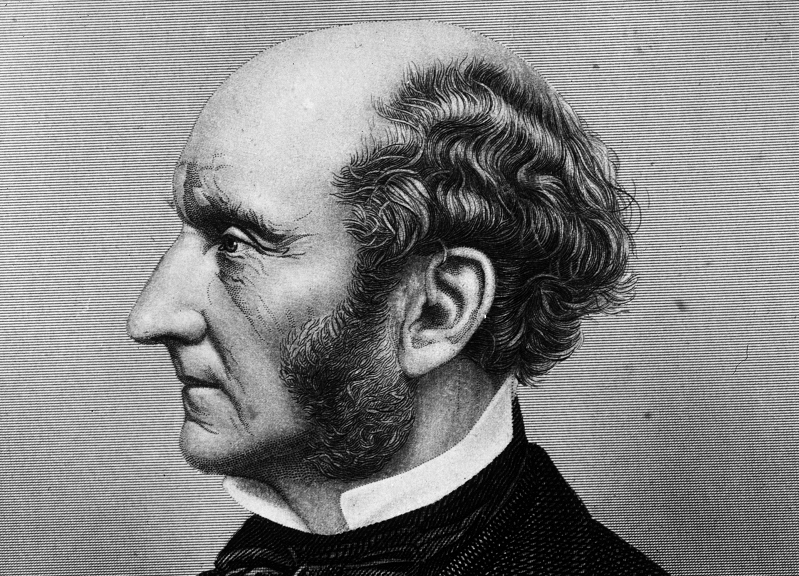
On Liberty – Modernising a Classic with Hubris and AI
Books are great, and non-fiction books definitely have a pivotal role in the transmission of human knowledge, but I have to admit that many of them are unnecessary. Having read a large number of exceedingly good blog posts, in which talented authors condense profound insight down into a few thousand words, I have started noticing when a book really could have just been a blog post.
I do not necessarily mean to denigrate the ideas put forth in these books, only to observe that sometimes less is more; after all, a reader’s time is a finite resource. Obviously, any book that covers multiple ideas, requires many examples to be worked through, or addresses a complex enough concept, is probably justified in taking time over. That being said, the profound is not always complex, and a concise expression of an idea is more likely to be more widely read. Unfortunately, expressing something concisely often takes more effort, and in many cases there will be more money in a book deal than in creating a viral blog post, so the effort is not worthwhile for the author.
If it is a ten–minute speech it takes me all of two weeks to prepare it; if it is a half–hour speech it takes me a week; if I can talk as long as I want to it requires no preparation at all. I am ready now.
Woodrow Wilson
As a brief tangent, liberalism is a cause close to my heart, and I think the world would benefit from people being more aware of its true meaning, its justifications, and the broad thrust of its philosophy. John Stuart Mill was a polymath in Victorian England, who wrote a book detailing what is considered by many to be the defining principles of liberalism. This book is called “On Liberty”, and it is to this day given to each newly elected president of the UK’s Liberal Democrat Party, as a reminder of the principles that they should endeavour to uphold. Of course, as it was written in 1859, it is in a very different style to what most people are used to today – it is not exactly easy reading, and that makes it much less accessible than it would ideally be. He also labours the point quite a bit, but in fairness, liberalism was a very new concept when it was written, so I can understand that this was more necessary at the time, than it is now.
With these thoughts in mind, I have had the intention for quite some time to attempt to turn “On Liberty” into something more akin to a blog post – using more modern language and making it significantly more concise, in an effort to present its ideas in a more appealing package. This of course shows enormous hubris – J.S. Mill was nothing short of a genius, and wrote exactly what he meant, in exactly the way he wanted it to be presented. His book is relatively short, clocking in at around 48,000 words, so if you enjoy reading densely philosophical Victorian prose, please do give it a go.
The advent of ChatGPT did however give me an idea – I could get it to re-parse the book, in a way that inserts a minimal amount of myself, my own personal opinions and biases. Of course, this would introduce plenty of other biases from the milieu of OpenAI’s training data, but this at least felt a little less hubristic to me. I didn’t want to oversimplify any of the concepts, so I avoided asking it to use simple language, only more modern language and phrasing that would allow the sentences to flow better for a modern reader. In order to ensure that an appropriate style and level of vocabulary was maintained, I asked ChatGPT to write in the style of a particular writer, who (as far as I am concerned) regularly writes precisely and technically in an engaging manner. As an admirer of Scott Alexander’s writings, he was my first choice, but ChatGPT’s attempts to ape his style came off more as a parody than a homage. It turns out that Scott Alexander’s humour is (for the time being) too subtle to replicate. I settled on Eliezer Yudkowsky instead, whose writings I still find brilliant, but who (I would argue) uses less humour and more technical language to make his points.
In this venture, I have endeavoured to keep the overall structure of the book intact – there are the same 5 chapters, and within each chapter, each concept, topic or paragraph is still roughly in order. This meant that rather than asking for a summary of the whole book, or otherwise doing this in one go, I instead fed a few paragraphs at a time into ChatGPT for it to rewrite, then edited the outputs together, ensuring that the overall structure was maintained. I kept J.S. Mill’s first person perspective as well, opting to avoid repeating cumbersome phrases of the form “Mill states…”, “It is Mill’s opinion that…”. I have also inserted plenty of particularly juicy or oft-quoted quotations from the original into the text, in the approximate location they occur.
I did all of this a while ago using GPT-4, and didn’t get around to publishing it, so it is fair to say that given the apocalyptic speed of development in AI, I could do this same exercise today using Fable-5.1 or GPT-6, and it would be able to do the whole text in one go, leaving me with very little editing to do. This is a very good example of the tension between ease and understanding in the discussion about AI use – taking a more manual, paragraph-by-paragraph approach forced me to pay attention to every bit of the book, reading it with my full attention in order to check that I agreed with the output at quite a granular level. Whilst using GPT-4 certainly saved me a huge amount of effort compared with reinterpreting the book myself, which allowed me to overcome the inertia of such an enormous task; if I were to do it again today with GPT-6 instead, I would likely gain almost nothing from the process. The remaining effort I expended helped me to better understand the book and to organise my own thoughts – reducing the effort to zero would have meant denying myself that learning opportunity.
The essay below, at 9,600 words, is only 20% of the length of the original (even including all of the quotations, which make up 1,600 of those words) – a longish blog post, rather than a 150 page book. I think that the text is still a good substitute for “On Liberty”, and that it covers all of the major and minor points that J.S. Mill made, however if you are a fan of the original, and think that I have missed something important please let me know. Without further ado – please enjoy the blog-post length version of “On Liberty”, as written by GPT-4 in the “style of Yudkowsky”, compiled and edited by yours truly:
On Liberty
- Chapter 1 – Introduction
- Chapter 2 – Freedom of Thought
- Chapter 3 – Of Individuality, as one of the Elements of Well-being
- Chapter 4 – Of the Limits to the Authority of Society over the Individual
- Chapter 5 – Applications
Chapter 1 – Introduction
In this essay, I am not discussing the philosophical concept of free will, but rather civil or social liberty: how much power society should have over an individual. This issue, often overlooked, is crucial and is becoming increasingly recognized as central to our future. It is an age-old debate, now emerging under new conditions in our modern societies.
Historically, the struggle between liberty and authority is well-documented, especially in Greece, Rome, and England. Initially, liberty meant protection from the tyranny of political rulers, who were often seen as inherently antagonistic to the people. To safeguard against oppressive rule, two methods were employed: establishing political rights and setting up constitutional checks. Initially, rulers had to accept certain limitations, but achieving more comprehensive constitutional checks became the primary goal for advocates of liberty.
Eventually, people started to prefer rulers who were their representatives, revocable at their will, believing this would prevent abuse of power. This led to a shift in focus from limiting power to ensuring rulers represented the people’s interests. The idea was that a government responsible and answerable to the people could be trusted with power.
However, the success of democratic systems revealed a critical oversight: the people in power are not always representative of all the people. “Self-government” often means the majority ruling, which can lead to oppression of minorities. Hence, limiting government power remains essential, even in a democracy. The idea of “tyranny of the majority” has become a recognized risk that societies need to guard against.
Tyranny of the majority is not just about government actions. Society itself can become a tyrant, imposing its values and norms on individuals, often more pervasively than any political oppression. It is not enough to guard against government overreach; we also need protection from societal pressures that force conformity and stifle individuality.
Society can and does execute its own mandates; and if it issues wrong mandates instead of right, or any mandates at all in things which it ought not to meddle, it practices a social tyranny more formidable than many kinds of political oppression, since, though not usually upheld by such extreme penalties, it leaves fewer means of escape, penetrating much more deeply into the details of life, and enslaving the soul itself.
Yet, setting the boundary between individual freedom and societal control is tricky. Some rules are necessary for coexistence, but deciding what these rules should be is complex and varies across cultures and eras. People often take their societal norms for granted, mistaking custom for natural law.
Our moral judgments are influenced by a multitude of factors: prejudices, social affections, personal interests, and even class dynamics. The morals of a dominant class often reflect their interests and perspectives, influencing society’s overall moral outlook. When a class loses power, the prevailing morals often shift to reflect new attitudes. Besides, people’s desire to please their leaders or gods has historically shaped moral norms, sometimes leading to extreme actions like persecution.
In short, understanding and navigating the balance between individual autonomy and societal norms is a complex, ever-evolving challenge that hinges on recognizing the diverse influences shaping our moral perceptions and judgments.
Society’s preferences largely dictate what is enforced by laws or social norms. Progressive thinkers often do not challenge this but rather debate what society should like or dislike. The notable exception is religious belief, where the idea of freedom of conscience emerged strongly, yet true religious freedom is rare, often hindered by lingering intolerance.
In England, the influence of public opinion is strong, yet there is resistance to government meddling in personal matters. This is not due to a respect for individual independence, but rather a distrust of government motives. People’s attitudes towards government intervention are inconsistent and often based on personal preferences rather than a clear principle.
The key point of this essay is to propose a simple principle: society should only control an individual to prevent harm to others. Personal well-being or moral views do not justify coercion. An individual’s freedom should be absolute in matters concerning only themselves. Society’s right to intervene is limited to preventing harm to others.
Over himself, over his own body and mind, the individual is sovereign.
This doctrine applies only to adults with mature faculties, not children or those in societies still developing. In such cases, a benevolent despotism can be justified for societal improvement. However, once a society is capable of improvement through free discussion, coercion should only be used for others’ security, not for an individual’s own good.
Despotism is a legitimate mode of government in dealing with barbarians, provided the end be their improvement.
I prioritize utility in ethical questions, focusing on the long-term interests of humans as progressive beings. Individual actions should only be controlled if they affect others. Harmful actions can be punished or socially disapproved. Individuals may also be compelled to perform positive acts for others, like giving court evidence or contributing to common defence. Inaction that causes harm can also be accountable, though more cautiously.
A person may cause evil to others not only by his actions but by his inaction, and in either case he is justly accountable to them for the injury. The latter case, it is true, requires a much more cautious exercise of compulsion than the former. To make any one answerable for doing evil to others is the rule; to make him answerable for not preventing evil is, comparatively speaking, the exception.
There is a sphere of action affecting only the individual, or others with their consent, where society should not interfere. This includes freedom of conscience, opinion, and lifestyle choices, as long as they don’t harm others. The right to associate freely with others, assuming all are consenting adults, is also part of this liberty.
True freedom means pursuing what we consider to be good, in a way of our choosing, provided we do not hinder others from doing the same. Everyone should have power over themselves, both physically and mentally. Society benefits more by allowing individuals to live as they choose than by forcing everyone to conform to a collective idea of a good life.
The only freedom which deserves the name is that of pursuing our own good in our own way, so long as we do not attempt to deprive others of theirs, or impede their efforts to obtain it. Each is the proper guardian of his own health, whether bodily, or mental or spiritual. Mankind are greater gainers by suffering each other to live as seems good to themselves, than by compelling each to live as seems good to the rest.
Despite its apparent simplicity, this idea clashes with current opinions and practices. Historically, both governments and religions have tried to control personal behaviour, believing it to be in the public’s interest. In modern times, while legal interference in private life has reduced, moral and social pressures to conform remain strong, often encouraged by religious and philosophical leaders. For example, Auguste Comte’s philosophy advocates for societal control over individuals, exceeding even ancient philosophies.
There is a growing trend to extend society’s influence over individuals, both in opinion and law. This trend is unlikely to reverse on its own. The natural human tendency to impose personal beliefs on others, backed by increasing power, needs a strong moral counterbalance to prevent its escalation.
I will start by discussing Liberty of Thought, which is closely linked to freedom of speech and writing. While these freedoms are recognized to some extent in countries with religious tolerance and free institutions, their philosophical and practical foundations are not widely understood. Exploring these will provide a solid foundation for discussing broader aspects of liberty. Even if these ideas are not new to some, revisiting them is crucial in our ongoing dialogue about freedom.
Chapter 2 – Freedom of Thought
It is now widely accepted that freedom of the press is essential to guard against corrupt or tyrannical governments. The idea that a government, separate in interests from the people, should not control public opinion is well established. However, even in constitutional countries, governments often reflect public intolerance rather than imposing their own views.
The crux of my argument is that neither the people nor their government have the right to suppress opinions, regardless of how popular or unpopular these opinions are. Even if the entire world disagreed with one person, they would not be justified in silencing that individual. Suppressing an opinion harms humanity, denying us the chance to replace error with truth or to understand truth more clearly through its clash with error.
If all mankind minus one, were of one opinion, and only one person were of the contrary opinion, mankind would be no more justified in silencing that one person, than he, if he had the power, would be justified in silencing mankind.
…
The peculiar evil of silencing the expression of an opinion is, that it is robbing the human race; posterity as well as the existing generation; those who dissent from the opinion, still more than those who hold it. If the opinion is right, they are deprived of the opportunity of exchanging error for truth: if wrong, they lose, what is almost as great a benefit, the clearer perception and livelier impression of truth, produced by its collision with error.
We should have complete freedom to express and debate any view, no matter how it is morally perceived. Debating the morality of tyrannicide is not our focus here, but it has always been a controversial moral question. I argue that promoting specific acts of violence can be punishable, but only if there is a direct and probable link to an actual overt act. In such cases, only the government targeted has the right to respond in self-defence.
We cannot be certain an opinion is false, and even if we were, silencing it is still wrong. To silence an opinion is to assume infallibility. While everyone admits to being fallible, few act to guard against their own fallibility, especially those in positions of power or those surrounded by agreeable opinions. This confidence in collective opinion persists despite historical evidence of widespread errors in judgment.
Some might argue that using judgment, even if fallible, is necessary, and not using it due to potential error is irresponsible. They say acting on firm beliefs is not arrogance but duty, and not restricting harmful doctrines is dangerous. There is however a significant difference between believing an opinion is true because it has not been disproven, despite open debate, and assuming it is true to prevent its challenge. True confidence in an opinion comes from it surviving free and open contradiction, not from shielding it from opposition.
The progress in human opinion and conduct is not due to inherent intellectual strength, as most people cannot properly judge complex matters. Instead, it is because human errors are correctable through discussion and experience. We need open debate to interpret experiences and correct our opinions.
Wisdom comes from constantly challenging and refining our beliefs against differing viewpoints. This process, not avoidance of opposition, is what gives us justified confidence in our judgments. The wisdom of the public should undergo the same rigorous scrutiny as that of the wisest individuals. Even the process of canonizing saints involves considering all counterarguments, emphasizing the importance of challenging even the most revered beliefs.
The only way in which a human being can make some approach to knowing the whole of a subject, is by hearing what can be said about it by persons of every variety of opinion, and studying all modes in which it can be looked at by every character of mind. No wise man ever acquired his wisdom in any mode but this; nor is it in the nature of human intellect to become wise in any other manner.
It is contradictory to value free discussion but reject its extremes. Claiming certain ideas should not be debated is assuming infallibility. In our era, where certainty in beliefs is shaky, some argue for protecting beliefs essential for societal well-being, even if they are not infallibly true. But this shifts the infallibility assumption from the truth of the opinion to its utility, which is also debatable.
Banning discussion on an opinion’s truth also restricts debate on its utility since both are intertwined. You cannot separate an opinion’s desirability from its truth. It is unfair to allow the utility argument only for accepted beliefs but not for dissenting ones. Thus, even when society or law does not tolerate questioning the truth of an opinion, they equally resist questioning its utility. This approach stifles fair debate and assumes infallibility in determining both the truth and utility of opinions.
To highlight the dangers of silencing opinions we personally deem wrong, let us consider challenging beliefs like the existence of God or common moral doctrines. It is easy to think these beliefs are too certain to debate, but certainty is not the issue. The problem is deciding these matters for others without hearing opposing views, a stance harmful regardless of our convictions.
Historical examples show how this approach can lead to egregious errors. Socrates, a paragon of virtue, was executed for impiety and corrupting youth. Jesus Christ, revered for centuries, was crucified as a blasphemer. Both were condemned by people who, in their context, acted sincerely. Even Saint Paul initially persecuted Christians. Marcus Aurelius, a wise and just emperor, persecuted Christianity, believing it harmful to society.
These cases show even the most enlightened can err profoundly. Suppressing an opinion, believing it wrong or harmful, assumes a dangerous level of infallibility. If someone advocates for such suppression, they must consider if they are wiser or more enlightened than figures like Marcus Aurelius. Recognizing our fallibility is crucial in avoiding the grave mistakes of the past.
Some argue that truth should be persecuted as it will prevail anyway, citing religious history to support this. They claim persecution sorts truth from error, but history shows that truth often suffers under persecution. For example, the Reformation was suppressed multiple times before Luther. This view overlooks the human cost of persecuting truth-bearers and assumes that truth is inherently resilient, which is not always the case.
In contemporary society, legal penalties may no longer be death, but other forms of punishment still suppress opinions. For instance, people have been imprisoned for irreligious statements, or denied justice for lacking theological belief. These actions are remnants of persecution, suggesting a latent desire to suppress dissenting opinions. The current state of public opinion does not guarantee that this will not escalate in the future.
The so-called revival of religion often brings a resurgence of intolerance. Even in a seemingly progressive era, there is no assurance against the return of more overt forms of persecution, especially in a society where narrow-mindedness and intolerance persist. The real freedom of thought is not just about the absence of legal persecution but also about the attitudes and beliefs people hold towards those who disagree with them.
Legal penalties for dissenting opinions bolster social stigma, effectively silencing people as much as imprisonment would. In England, fear of social disapproval deters public expression of controversial beliefs more than legal risks do. This social intolerance does not kill ideas or people but forces them to hide, preventing the widespread discussion and evolution of these ideas.
Our society’s intolerance does not just harm dissenters; it also stunts intellectual growth in general. People refrain from exploring bold ideas for fear of social backlash, leading to a lack of genuine intellectual engagement and development. Even those with secure livelihoods and no need for public approval often avoid sharing controversial opinions due to social stigma.
No one can be a great thinker who does not recognize that as a thinker it is his first duty to follow his intellect to whatever conclusions it may lead.
The harm is twofold: first, controversial ideas are not thoroughly debated and tested, and second, the intellectual development of the entire society is hampered. We lose out on potentially revolutionary ideas and the general mental stimulation that comes from grappling with challenging concepts. History shows that periods of intellectual liberation, like post-Reformation Europe or the Enlightenment, have led to significant advancements. In contrast, when society clings to orthodoxies without question, intellectual stagnation ensues.
Even if we assume prevailing opinions are true, not openly discussing them turns them into lifeless dogmas rather than living truths. Holding beliefs without understanding their rationale reduces them to mere fables. It is not enough to simply agree with the truth; one must understand why it is true. Without this understanding, even correct beliefs are held in a way that is indistinguishable from superstition.
Intellectual and moral growth hinges on challenging and defending our beliefs, especially those crucial to us. Just memorizing opinions is not enough; understanding the reasoning behind them is key. In areas like mathematics, where the truth is one-sided, this is straightforward. But in complex subjects like morality, religion, and politics, understanding requires grappling with opposing arguments. We learn most when we confront the strongest counterarguments.
He who knows only his own side of the case knows little of that. His reasons may be good, and no one may have been able to refute them. But if he is equally unable to refute the reasons on the opposite side, if he does not so much as know what they are, he has no ground for preferring either opinion.
…
Nor is it enough that he should hear the opinions of adversaries from his own teachers, presented as they state them, and accompanied by what they offer as refutations. He must be able to hear them from persons who actually believe them.
…
He must be able to hear them from persons who actually believe them; who defend them in earnest, and do their very utmost for them. He must know them in their most plausible and persuasive form.
…
Their conclusion may be true, but it might be false for anything they know: they have never thrown themselves into the mental position of those who think differently from them, and considered what such persons may have to say; and consequently they do not, in any proper sense of the word, know the doctrine which they themselves profess.
Most so-called educated people have not truly engaged with opposing viewpoints. They might argue for their beliefs, but without understanding the other side, they are essentially just echoing what they’ve been told. True knowledge comes from critically examining both sides of an argument.
Some might argue that average people do not need to delve into philosophical debates; it is enough if experts can counter objections. This overlooks the fact that understanding the reasons for beliefs is crucial for everyone. The Catholic Church historically allowed only clergy to explore opposing views, while laypeople were to accept doctrines without question. In Protestant societies, where individual responsibility for belief is emphasized, this approach is not feasible. Free discussion is essential for all, ensuring that ideas are not just blindly accepted but understood and meaningfully held.
Without this discourse, beliefs degenerate into mere slogans. History shows that doctrines lose their vitality once they stop being actively challenged and debated. Thus, for beliefs to remain robust and meaningful, they must be continually examined and defended in the open arena of public discourse.
Religious teachers lament believers’ superficial grasp of doctrines they nominally accept. This issue is not present when a creed is new and contested; its principles are actively explored and understood. But once a belief becomes hereditary and passively received, it often loses depth, turning into mere formulaic acceptance without impacting real behaviour or inner life.
In Christianity, most followers do not actively apply the core teachings in their daily lives; they align more with societal norms than with their faith’s deeper principles. Early Christians, in contrast, had a profound connection with their beliefs, which fuelled the religion’s growth. But now, these doctrines often lie dormant in believers’ minds, not actively questioned, or defended.
Both teachers and learners go to sleep at their post as soon as there is no enemy in the field.
This phenomenon is not limited to religion. All traditional doctrines, including life wisdom and ethics, suffer when they are not actively debated. People tend to understand and feel the full meaning of these doctrines only when they personally experience their implications. The absence of discussion leads to a shallow understanding and acceptance of ideas.
The challenge is how to maintain the vitality of truths once they become universally accepted. When beliefs are no longer contested, they risk becoming dead dogmas. The ideal scenario would involve creating ways to keep the intellectual challenge alive, simulating the conditions of debate and dissent even when a consensus has been reached, to ensure a deep and living understanding of these truths.
Educational methods have lost their previous focus on developing critical thinking. For instance, Socratic dialectics and medieval scholastic disputations once ensured deep understanding of one’s beliefs and the opposing views, but modern education lacks such rigorous debate. Presently, most people only know their side of an argument, weakening their understanding and conviction.
Negative criticism, often undervalued, is vital for attaining true knowledge, particularly outside mathematics and physical sciences. Without actively engaging with opposing viewpoints, one’s understanding remains shallow. In our times, we have lost the habit of challenging prevailing beliefs, leading to intellectual stagnation.
Popular opinions, on subjects not palpable to sense, are often true, but seldom or never the whole truth.
Society’s response to the writings of Rousseau in the 18th century illustrates how challenging mainstream opinions can inject vital, missing truths into public discourse. Similarly, in politics, the interplay between opposing views, like those supporting democracy vs. aristocracy or progress vs. stability, is crucial for a balanced and healthy political environment. The minority opinion often represents neglected aspects of truth and deserves attention and expression.
A party of order or stability, and a party of progress or reform, are both necessary elements of a healthy state of political life.
In essence, diversity of opinion is essential for a comprehensive understanding of complex issues. Even when the majority is right, minority views contribute to a more nuanced and complete grasp of the truth. The current state of intellectual discourse needs this variety of perspectives to avoid stagnation and ensure the development and refinement of ideas.
Some argue that Christian morality is the complete truth in ethics, but defining what constitutes this morality is complex. The teachings of the New Testament, often seen as the basis of Christian morality, reference and assume pre-existing moral frameworks. They are not comprehensive but rather address specific areas needing reform. The morality developed by the Christian Church over centuries, while influential, is incomplete and sometimes reactionary, focusing more on passive obedience and avoiding evil than on actively pursuing good.
The sayings of Christ, though potentially harmonious with a comprehensive moral system, represent only a part of the truth. Relying solely on Christian teachings for moral guidance risks developing a limited and submissive character type, incapable of understanding or aspiring to a higher concept of goodness. Other ethical perspectives, both secular and non-Christian, are necessary to achieve moral advancement. Acknowledging truths outside of Christian doctrine does not mean dismissing its valid teachings but rather recognizing that no single perspective holds the entirety of moral truth.
This approach also applies to other domains like politics, where understanding and integrating diverse viewpoints is crucial. Freely expressing all opinions, even when they conflict, is essential for a complete grasp of truth. While not eliminating the tendency of ideas to become sectarian, open discussion ensures that truths are not suppressed and exaggerated into falsehoods. The healthiest intellectual environment is one where all sides of an issue are heard and considered, allowing for a balanced and comprehensive understanding.
Freedom of opinion and its expression is crucial for mental well-being and is based on four key reasons:
- Silenced opinions might be true; assuming otherwise is to claim infallibility.
- Even false opinions often contain partial truths, which are essential for uncovering the complete truth.
- Without active debate, even true beliefs become mere prejudices, lacking rational understanding.
- The essence of a belief can be lost or weakened if it is not actively contested, turning into a hollow doctrine without impact on character or conduct.
Regarding the manner of expressing opinions, it is challenging to define the boundaries of ‘fair discussion’. Attempts to limit debate often suppress strong, effective arguments, especially against prevailing opinions. While the style of argumentation matters, focusing only on the tone misses the point. What is critical is the honesty and integrity of the discussion. In practice, controversial opinions must be moderately expressed to gain a hearing, while prevailing opinions often enjoy the unfair advantage of being assertively promoted.
The worst offence of this kind which can be committed by a polemic, is to stigmatize those who hold the contrary opinion as bad and immoral men.
For truth and justice, it is more important to limit offensive language against minority opinions. However, it is not the role of law to regulate these discussions, but rather of public opinion, which should judge each case on its merits. The ideal in public discourse is to approach arguments with openness, honesty, and respect for opposing views, regardless of personal beliefs.
Chapter 3 – Of Individuality, as one of the Elements of Well-being
It is crucial for human well-being that people freely form and express opinions, and similarly essential that they act on these opinions without undue interference, as long as they alone bear the consequences. This freedom, however, does not imply unrestrained actions. For example, sharing controversial views like “private property is theft” is one thing when done in print, but could incite harm if preached to an agitated crowd in front of the house of a wealthy businessperson. Actions that harm others must be regulated, but in personal matters, individual autonomy should be paramount.
The challenge lies not in navigating the line between individual freedom and social restraint, but in recognizing the intrinsic value of individuality itself. Many overlook the value of individual spontaneity, seeing no reason societal norms are not sufficient for everyone. This mindset fails to grasp that the essence of human well-being and progress is the flourishing of individuality, rooted in freedom and diverse circumstances. This concept, championed by thinkers like Wilhelm von Humboldt in his work “The Sphere and Duties of Government”, holds that true development comes from the harmonious growth of our capacities, fostered by liberty and diverse experiences, leading to originality and strength. When individuality is appreciated by society, it is far easier to strike a healthy balance between freedom and restraint.
Embracing individuality is not just about rejecting conformity for its own sake. It is about recognizing that while we learn and grow from the shared human experience, true maturity and human development mean interpreting and applying this collective wisdom in our own, unique way. Von Humboldt’s insight – that personal growth and societal progress hinge on the freedom to be different – is not about rejecting all that came before us. It acknowledges that while history and tradition offer valuable lessons, they are starting points, not scripts.
The essence here is choice. Following tradition just because it is “what is done” does not stretch or grow our faculties. Real learning, decision-making, and personal development come from actively choosing – weighing options, predicting outcomes, and standing by our decisions. This active engagement with the world sharpens our intellect and character in ways that mere imitation never could.
The human faculties of perception, judgment, discriminative feeling, mental activity, and even moral preference, are exercised only in making a choice. He who does anything because it is the custom, makes no choice.
…
He who lets the world, or his own portion of it, choose his plan of life for him, has no need of any other faculty than the ape-like one of imitation. He who chooses his plan for himself, employs all his faculties.
…
Human nature is not a machine to be built after a model, and set to do exactly the work prescribed for it, but a tree, which requires to grow and develop itself on all sides, according to the tendency of the inward forces which make it a living thing.
…
Intelligent following of custom, or even occasionally an intelligent deviation from custom, is better than a blind and simple mechanical adhesion to it.
The bigger picture is about what kind of human beings we become through this process. Are we mere echoes of our ancestors, or do we use our inherited wisdom as a springboard to become fuller, more complex individuals? If humanity were to automate everything, including our actions and decisions, we would lose something irreplaceable – the dynamic, evolving essence of what it means to be human. Nature did not intend us to be static replicas, but vibrant, growing beings, each with our own direction and story.
In a world where being unique is often frowned upon, the importance of individual desires and impulses cannot be overstated. Unlike opinions, which are somewhat acknowledged to be personal, there is a hesitance to accept that our desires should also be uniquely our own. Yet these impulses are as vital to the makeup of a fully realized human being as our beliefs and our moral boundaries. Strong impulses are not inherently problematic – it is a lack of moral strength that leads to issues. Desires are just raw potential that can lead to as much greatness as they can downfall. Cultivating this energy is where society’s role should be, not in stifling it for fear of the potential for bad.
It is not because men’s desires are strong that they act ill; it is because their consciences are weak.
…
The danger which threatens human nature is not the excess, but the deficiency, of personal impulses and preferences.
In early societies, the challenge was to rein in the overwhelming force of individuality. But today, we face the opposite problem: a deficit of personal impulse, a world where everyone is looking sideways to see what others are doing before making a move. The question is not “What do I want?” but “What is expected of me?” This conformity starves our human capacities, leaving many without a sense of true self or any original thoughts or desires.
Is this what we want for humanity? A society of individuals who have forgotten how to desire independently, who have traded their unique impulses for a homogenized existence? The need is not for more conformity but for the courage to embrace and develop our individuality.
The core idea here is that human excellence is not just about conformity or obedience, as suggested by the Calvinistic view that celebrates the suppression of self-will in favour of divine surrender. This perspective argues that the essence of humanity is found in obedience, with any use of personal faculties for non-divine purposes deemed unnecessary. This is a narrow and harmful view of human potential, akin to preferring pruned trees over natural ones. It ignores the possibility that a benevolent creator would want us to develop and utilize all our faculties, not suppress them.
Opposing this, there is a richer, more liberating vision of human potential that values self-expression and the cultivation of individual talents within societal bounds. This is not about unchecked freedom, but about growing in ways that respect others’ rights and contribute to the community. The blend of self-development and self-restraint enriches both the individual and society, making life more dynamic and meaningful.
A society that allows diverse paths of development, without encroaching on others, not only elevates the individual but also enhances the collective human experience. Restraint is necessary only to prevent harm to others, balancing individual growth with social harmony. This approach to individuality avoids the extremes of total anarchy or stifling uniformity, promoting a society where personal growth and social responsibility coexist.
Even despotism does not produce its worst effects, so long as individuality exists under it; and whatever crushes individuality is despotism, by whatever name it may be called, and whether it professes to be enforcing the will of God or the injunctions of men.
To those unconvinced of the value of individuality, consider this: originality is essential for progress. Innovators and thinkers who deviate from the norm drive societal evolution. A society that suppresses individuality loses potential geniuses, and without the few who dare to explore new territories or challenge outdated norms, society risks stagnation. Even those who value conformity can benefit from others’ freedom to be different, as whilst the majority might find comfort in the familiar, it is the trailblazers who prevent our collective descent into complacency.
Genius needs freedom to thrive, as truly groundbreaking individuals often do not fit well into society’s standard moulds. If they conform out of fear, we all lose; if they refuse to conform, society labels them as rebels. Yet, it is precisely these “rebels” who push humanity forwards.
Originality and genius are often admired in theory but undervalued in practice. Most people do not see their practical utility, as they lack the originality to perceive its impact. But remember, every advancement, every piece of knowledge we now take for granted, began as a spark of originality from someone who saw the world differently. We need these pioneers not just for what they achieve, but to inspire the rest of us to look beyond our horizons and perhaps discover our own paths of originality.
Persons of genius, it is true, are, and are always likely to be, a small minority; but in order to have them, it is necessary to preserve the soil in which they grow. Genius can only breathe freely in an atmosphere of freedom.
Society has evolved from valuing individual power to prioritizing consensus. Public opinion, especially of the masses, dominates, often leading to average outcomes. This is not to say that consensus is inherently bad, but it does lead to average governance at best. History shows us that true innovation and wisdom often originate from the few who dare to think and act outside the norm. While mass consensus drives society, it is the unique insights of individuals who dare to be different that elevate us beyond mere mediocrity.
The real issue now is the overwhelming sway of conformity, where even the media echoes the voice of the average, discouraging deviation from the norm. This era, more than any before, needs the non-conformists and the eccentrics, not just for their direct contributions, but as a statement against the homogenizing pressure of public opinion. The willingness to be different, to resist the current public opinion and to give room for the untried and the unconventional, has always been a hallmark of strong character and intellectual vitality.
In this age, the mere example of non-conformity, the mere refusal to bend the knee to custom, is itself a service. Precisely because the tyranny of opinion is such as to make eccentricity a reproach, it is desirable, in order to break through that tyranny, that people should be eccentric.
As today’s society leans towards intolerance of individuality, the essence of human progress hinges not just on embracing the unorthodox but on nurturing the diverse landscapes of individual lives. It is not only the intellectually elite who deserve the space to sculpt their existence uniquely; every person, armed with even the most basic sense of self, can craft a life more fitting to their own contours than any preset design. Just as no two plants thrive in the same environmental niche, humans require varied moral climates to reach their fullest potential. This diversity in living is not just a matter of taste, but a necessity for the full development of the human spirit.
Despite this, societal currents are flowing strongly towards uniformity, praising mediocrity, and discouraging deviation as if it were a moral failing. This pressure to conform does not just dull our personal lives but threatens the richness of our collective human culture. The inclination to mimic others, to suppress our unique desires and impulses under the weight of societal expectations, leads not to harmony but to a homogenization that stifles our potential. The robust characters and dynamic energies that historically propelled England to its zenith are fading into the realm of nostalgia, their once vibrant stories dissolving into footnotes of what could have been.
We may yet trick ourselves into avoiding this stationary feeling by having change that is constant but not always meaningful. We switch fashions with the seasons, but if everyone must still dress the same it is still stagnant. We may witness what look like innovations in technology, education, or morals, but if they are adopted simultaneously by everyone just for the sake of change, we fool ourselves. We could pride ourselves on this apparent progress, yet if we suppress individuality, we are simply forcing everyone to be as good as ourselves and no better, as we flatter ourselves that we are the most advanced people to have lived.
We have discarded the fixed costumes of our forefathers; every one must still dress like other people, but the fashion may change once or twice a year. We thus take care that when there is a change, it shall be for change’s sake, and not from any idea of beauty or convenience; for the same idea of beauty or convenience would not strike all the world at the same moment, and be simultaneously thrown aside by all at another moment.
China serves as a cautionary tale. Once a cradle of wisdom and innovation, it stagnated for centuries under a regime that enforced conformity and tradition. People’s narratives remaining unchanged over multiple generations, as customs dictate every aspect of life. This same danger looms over Europe, where diversity once fuelled progress, but in this case the push towards uniformity is instead public opinion.
The modern regime of public opinion is, in an unorganised form, what the Chinese educational and political systems are in an organised [form]
Public opinion increasingly dictates norms, flattening the societal landscape. There is little room for nonconformity when even politicians bow to the majority’s will. In his work “The Old Regime and the Revolution”, Tocqueville observed this diminishing individuality, especially in France. As different classes, professions, and localities become more alike, driven by shared media and education, our distinctiveness wanes.
For continuous development, two elements are crucial: freedom and diversity of circumstances. Both are under threat. As our lives align, our chances to develop unique characters and paths dwindle. This homogenization, accelerated by political, educational, and technological changes, risks stifling the individuality that is the essence of progress.
This trend, if unchecked, risk turning vibrant societies into stagnant pools, undermining the very essence of human progress and creativity. Once this has occurred, people quickly become unable to even imagine such diversity, making the trend even harder to reverse.
Chapter 4 – Of the Limits to the Authority of Society over the Individual
The balance between individual sovereignty and societal authority is crucial. Individuals should have freedom in personal matters, but society has a right to intervene when others are affected. Living in society implies certain obligations: not to harm others and to contribute to communal well-being. However, society’s reach should end where individual choices do not harm others.
While society is not built on a contract, mutual benefits demand mutual responsibilities. Harmful actions towards others justify societal intervention, either legally or through social disapproval. But in personal matters, where actions do not harm others, there should be complete freedom. This viewpoint does not imply indifference towards others’ well-being. We should encourage and help each other to make better choices, but without coercion. People are best positioned to judge their own interests, and societal interference should be limited to offers of assistance or advice, not constraints.
Public opinion, at its best, reflects what some believe is beneficial or harmful for others, yet often it doesn’t even reach this level of consideration. Many simply equate their own dislike for certain behaviours as a justification for banning them, ignoring the preferences and comforts of those involved. This mindset equates the deeply personal aspect of taste with the public’s right to intervene, a comparison as flawed as equating a thief’s desire for a purse with the owner’s right to keep it.
The ideal of a public that respects individual freedom in ambiguous matters, intervening only in actions universally deemed harmful, remains largely hypothetical. Instead, public interventions are frequently motivated by the offence taken at the mere difference in behaviour or belief. This approach, endorsed by a majority of moral and philosophical teachings, promotes the notion that actions are right if they feel right to us. Consequently, the public feels empowered to enforce its collective sensibilities on everyone, turning personal feelings of morality into universal mandates.
The boundary between individual liberty and social authority hinges on distinguishing self-regarding actions from those impacting others. Self-regarding actions, even if imprudent or undignified, should not draw societal retribution but only personal consequences. While self-harm can indirectly affect society and close relations, intervention should be reserved for clear violations of public or individual rights. The broader societal impact of personal choices, like gambling or alcoholism, while concerning, should not be grounds for legal intervention but rather for moral and social guidance.
This concept extends to how we react to others’ choices. We are free to admire or disdain, to include or exclude, based on personal choices as long as it doesn’t suppress individual freedom. Societal sanctions however, should only arise from the wider consequences of a person’s actions, not be imposed as punishment for personal life choices.
There are many who consider as an injury to themselves any conduct which they have a distaste for, and resent it as an outrage to their feelings; as a religious bigot, when charged with disregarding the religious feelings of others, has been known to retort that they disregard his feelings, by persisting in their abominable worship or creed. But there is no parity between the feeling of a person for his own opinion, and the feeling of another who is offended at his holding it; no more than between the desire of a thief to take a purse, and the desire of the right owner to keep it.
Consider religious dietary restrictions. In societies where the majority follow a certain religion, imposing dietary laws based on that religion’s tenets (like forbidding pork in a Muslim-majority society or forbidding beef in a Hindu-majority one) would not be a justified exercise of moral authority. It is a matter of personal taste and belief, not public concern.
Similarly, in countries like Spain, where non-Catholic forms of worship are seen as offensive, or in Puritanical societies where amusements like music and dancing are banned, the question arises: should such personal moralities be enforced upon everyone? This would be an infringement on personal liberty, as it imposes the majority’s beliefs and tastes on the minority.
Society’s propensity to extend moral policing to personal liberties is a universal human tendency. However, just because something is distasteful or morally objectionable to the majority does not justify banning it. The line should be drawn at personal freedoms that do not harm others. Public opinion should not dictate personal choices in matters that do not directly impact society or infringe upon the rights of others.
The boundary between individual liberty and social authority is a crucial debate, especially in a democratic society. Take, for instance, the United States, where democratic and societal norms might frown upon extravagant lifestyles. This is not a mere theoretical concern, but a reflection of how public opinion can unjustly limit personal choices, like how one spends their income.
Consider the broader implications. If socialist ideals gain more ground, could owning property or earning more than a modest income become socially unacceptable? We see similar tendencies already in some workforces, where there’s pressure to equalize wages regardless of skill or effort. This raises the question: if society can judge collective concerns, why not personal ones?
But this path is fraught with dangers. Take the prohibition of alcohol as an example. Some US states and English colonies banned fermented drinks to curb intemperance. While well-intentioned, these laws overstepped by dictating personal choices that mainly affect the individual, not society.
The United Kingdom Alliance, an organization campaigning for similar laws in the UK, claims a right to legislate on matters that invade “social rights.” They argue that alcohol trade harms society by fostering disorder and inequality. However, this stance dangerously blurs the lines between social acts and individual habits. Drinking alcohol is a personal act, yet its prohibition impacts personal liberty under the guise of addressing a social act.
Such a perspective could justify almost any infringement on liberty, as it hinges on the idea that every individual must act precisely as others deem correct. This doctrine neglects the essential principle of individual freedom, reducing it to the mere liberty of holding private opinions. It implies a vested interest in controlling others’ moral, intellectual, and physical actions, which is far more dangerous than any specific liberty violation. This mindset does not just challenge specific freedoms; it challenges the very concept of freedom itself.
Sabbatarian laws, which restrict activities on Sundays, are a prime example of unnecessary interference in personal liberty. While a day of rest is beneficial and its general observance may require some level of societal agreement, extending this to ban personal leisure activities or amusements is a step too far. Such restrictions are often justified on religious grounds, but it is not society’s role to enforce specific religious practices. This is a clear overreach into personal freedom and echoes the intolerance that fuelled historical religious persecutions.
Another pressing issue is the societal reaction to Mormonism, particularly its practice of polygamy. Although I strongly disapprove of polygamy, believing it undermines liberty and equal obligation, the reaction to this group has been disproportionately hostile. Mormons, facing violence and expulsion in the US, have established a community in a remote area. Despite their controversial practices, it is hard to justify external intervention in a community that does not harm others and allows freedom of departure. Suggesting a “civilisade” against them, as some have, ignores their autonomy, and oversteps the bounds of justifiable intervention.
In essence, while there are practices and beliefs we may personally reject, imposing our standards on isolated communities, especially through coercive means, is an unjustifiable infringement of their autonomy. It is not the place of distant observers, however civilized they may deem themselves, to forcibly change these communities. If our civilization cannot withstand such perceived “barbarism” without resorting to tyranny, it is a sign of our own degeneration, not theirs.
Chapter 5 – Applications
Before delving into specific applications, it is crucial to embrace the underlying principles of individual liberty and societal responsibility. This Essay’s core tenets are twofold: First, individuals should not be accountable to society for actions that only concern themselves. Society’s role is limited to advice, instruction, persuasion, and avoidance by other people, but not interference. Second, for actions that harm others, individuals are indeed accountable and may face social or legal consequences for protection of society.
However, not all actions causing pain or loss to others justify societal interference. For instance, competitive success often results in others’ disappointment, but society accepts this as a natural outcome. The key is ensuring the means to success are fair and non-exploitative.
Similarly, while trade affects society, it is recognized that free trade, under equal freedom for buyers, best serves public interest. Government intervention is justified only to prevent fraud or harm, not to control personal choices like purchasing poisons or other commodities. Here, regulation should balance preventing crime and accidents without unnecessarily restricting freedom.
In cases like the sale of poisons, regulations might include record-keeping to deter misuse without impeding legitimate access. Society has a right to prevent crimes but should avoid excessive control over personal actions. Even with self-harmful behaviours like drunkenness, legal intervention is warranted only when it leads to harm to others.
Finally, while some acts are harmful only to the individuals involved and should be free from legal prohibition, their public performance might infringe upon societal norms of decency and thus can be legitimately restricted.
In essence, a balance must be struck between respecting individual liberty and protecting societal interests, carefully evaluating when and how society should rightfully intervene.
The question arises whether society should intervene not only in actions but also in the advice or encouragement of actions deemed personally harmful. This is tricky because advising is a social act and may impact others, potentially falling under social regulation. However, the principles of individual liberty apply here too. People should be free to seek advice and make their own decisions, even if these decisions are risky or harmful to themselves. The issue gets complicated when someone profits from promoting harmful behaviours, like a pimp or a gambling-house owner. Here, we face a conflict between freedom of occupation and societal welfare.
On one hand, society should not criminalize actions or occupations that are essentially extensions of what’s individually permissible. On the other hand, there is a case for limiting or regulating activities that promote societal harm for personal gain. However, such regulation should not extend to outright prohibition, like with alcohol, as it infringes on legitimate individual liberty.
Taxing harmful substances like alcohol is acceptable to a point, primarily for revenue purposes, provided it does not amount to de facto prohibition for those with limited means. Licensing and regulating places where these substances are sold, especially for on-site consumption, is reasonable for maintaining public order and safety.
Ultimately, the principles of individual liberty and societal responsibility must guide these decisions. Excessive control over personal choices, especially in a society that values freedom, is unjustifiable without a clear and direct threat to public welfare. Efforts should be made to educate and empower individuals to make responsible choices, rather than resorting to paternalistic restrictions.
Individual liberty extends to agreements between individuals concerning their private matters. However, these agreements should generally be honoured, with exceptions for contracts that are inherently harmful or violate the rights of others. For example, a contract of slavery, even if voluntarily entered, should be void as it contradicts the essence of individual freedom. Liberty means being able to change one’s mind, not being bound indefinitely by a past decision.
The complexity arises when personal agreements impact others. In marriage, for example, Wilhelm Von Humboldt argues for easy dissolution, but such contracts often create obligations toward others, like children in this instance. The decision to end a marriage or any other contract that created obligations to third parties should consider these wider impacts, even if legally the parties can separate relatively easily.
There is a misuse of the concept of liberty in family relations, particularly the unchecked power of husbands over wives and parents over children. Individual liberty should not extend to actions that impact others, especially within family dynamics. The state has a duty to protect the rights and freedoms of all individuals, including children and spouses, from the excesses of parental or marital authority.
This is especially important in education. Compulsory education should be enforced by the state, and while the state should not monopolize education, it should ensure every child receives it. Parents should be morally and legally obligated to educate their children, and the state should step in, potentially at the parents’ expense, when they fail to do so.
It still remains unrecognised, that to bring a child into existence without a fair prospect of being able, not only to provide food for its body, but instruction and training for its mind, is a moral crime, both against the unfortunate offspring and against society; and that if the parent does not fulfil this obligation, the State ought to see it fulfilled, at the charge, as far as possible, of the parent.
The state’s role should be ensuring access and setting standards, not monopolizing, or directing educational content. Diversity in education methods is crucial for fostering individuality and societal progress. While state-run education may be a lesser evil in a society that cannot provide it otherwise, it is preferable to have a variety of educational institutions, preventing a state-imposed uniformity of thought, with the state ensuring compulsory education and supporting financially where necessary.
A general State education is a mere contrivance for moulding people to be exactly like one another; and as the mould in which it casts them is that which pleases the dominant power in the government, whether this be a monarch, an aristocracy, or a majority of the existing generation; in proportion as it is efficient and successful, it establishes a despotism over the mind, leading by a natural tendency to one over the body.
Annual public examinations can ensure a minimum standard of education, focusing on factual knowledge rather than opinions on contentious subjects. Where opinions are unavoidable, such as in politics or religion, instead of testing beliefs, they should verify awareness of different perspectives, again preventing the state from exercising an improper influence. Higher education and specialized knowledge should be pursued voluntarily, and assessments in these fields should be open to all, with certifications based on merit rather than societal status or privilege.
On the broader aspect of liberty, it is critical to distinguish between actions that solely affect the individual and those impacting others. In family matters, especially regarding children, liberty does not mean absolute freedom to act as one pleases. Bringing a child into the world is a significant responsibility, and society can legitimately demand that parents provide not just for the physical needs but also for the intellectual and emotional development of their offspring.
Furthermore, population control measures, like restricting marriage and childbearing in overpopulated areas, are within the realm of legitimate state intervention. This is because the unchecked expansion of population can detrimentally impact the collective welfare. True liberty requires balancing personal freedoms with the responsibilities and consequences these freedoms entail for oneself and for society.
The laws which, in many countries on the Continent, forbid marriage unless the parties can show that they have the means of supporting a family, do not exceed the legitimate powers of the State.
…
current ideas of liberty, which bend so easily to real infringements of the freedom of the individual in things which concern only himself, would repel the attempt to put any restraint upon his inclinations when the consequence of their indulgence is a life or lives of wretchedness and depravity to the offspring.
In modern terms, the primary concern here is determining the appropriate extent of government involvement in societal matters. This is not about restricting individual freedoms, but about whether government should act for the people’s benefit in cases where liberty is not directly at stake.
There are three main arguments against unnecessary government intervention:
- Efficiency: Often, individuals or voluntary groups handle tasks more effectively than the government. This is especially true in areas like business or industry, where those directly involved usually have the best understanding and a personal stake.
- Development: Even if government can handle certain tasks more efficiently, it’s often better for individuals to manage them for their own growth and education. This fosters their abilities, judgment, and a sense of community responsibility. Examples include jury duty, local governance, and voluntary associations for social or economic projects. This is not about liberty, but it is about developing a citizenry capable of self-governance and understanding joint interests.
- Power Concentration: Excessive government roles can dangerously centralize power and create a dependency culture. This can turn society into a collection of government dependents, hindering freedom and initiative. For instance, if major industries or educational institutions are government-run, the bureaucracy swells. Such a system not only stifles individual initiative and diversity but also weakens the public’s ability to critically assess and influence government actions. Even well-intentioned proposals, like competitive examinations for civil service, must be cautious not to inadvertently centralize talent and ambition exclusively within government structures.
This is the unfortunate situation in Russia: an overly powerful bureaucracy has rendered even a ruler like the Czar impotent. Even in the event that the populace rise against the government in revolution, somebody else will ultimately find themselves in that same position of issuing orders to the bureaucracy, and the country will continue to operate as it did before, unchanged.
The Czar himself is powerless against the bureaucratic body; he can send any one of them to Siberia, but he cannot govern without them, or against their will. On every decree of his they have a tacit veto, by merely refraining from carrying it into effect.
In contrast, the French army for example, has many non-commissioned officers that are capable of leadership in the absence of a command structure. This kind of approach is mirrored in the world of business in the United States, where people are well accustomed to self-management, and could therefore function effectively even in the absence of government. This is the hallmark of a truly free people.
The goal should be to balance the benefits of centralized government action against the risks of stifling individual initiative and responsibility. In practical administration, like local governance, the ideal is to combine centralized knowledge and oversight with decentralized execution. This ensures that localities have the freedom to act but can draw on a wealth of shared experience and guidance.
Ultimately, a state’s worth lies in its citizens’ worth. A government that prioritizes administrative efficiency over the mental and moral development of its people will eventually falter, lacking the vital, innovative spirit that comes from empowered, capable individuals.